

Starbucks: The Third Place Strategy

-
Level:
Intermediate & higher -
Estimated classroom time:
90 min
-
Access:
free
What you get
A ready-to-use, discussion-driven ESL workbook built around a real business case: Starbucks’ Third Place strategy and Project SEAT.
This lesson goes beyond coffee. Students explore how brands design spaces to influence behavior, encourage engagement, and reposition themselves in a changing world. Through structured tasks and guided discussion, learners analyze how physical space, customer experience, and marketing strategy connect.
The vocabulary section equips students with sharp, business-focused language for discussing branding, customer experience, and strategic change with clarity and confidence. Learners work with terms such as to position, to merge, extension, to fill a need, to be consistent, and to engage in, applying them directly to case analysis and structured discussion.
Instead of memorizing isolated words, students learn how to express strategic thinking, evaluate impact, and communicate balanced opinions – making their English sound analytical, precise, and business-ready.
This workbook is built around structured, high-engagement tasks that push students to think critically and speak confidently. Each activity moves beyond simple discussion and guides learners toward analytical, business-focused communication.
You’ll find:
✅ An ice-breaker introducing the concept of the “third place” and connecting it to students’ real-life experiences
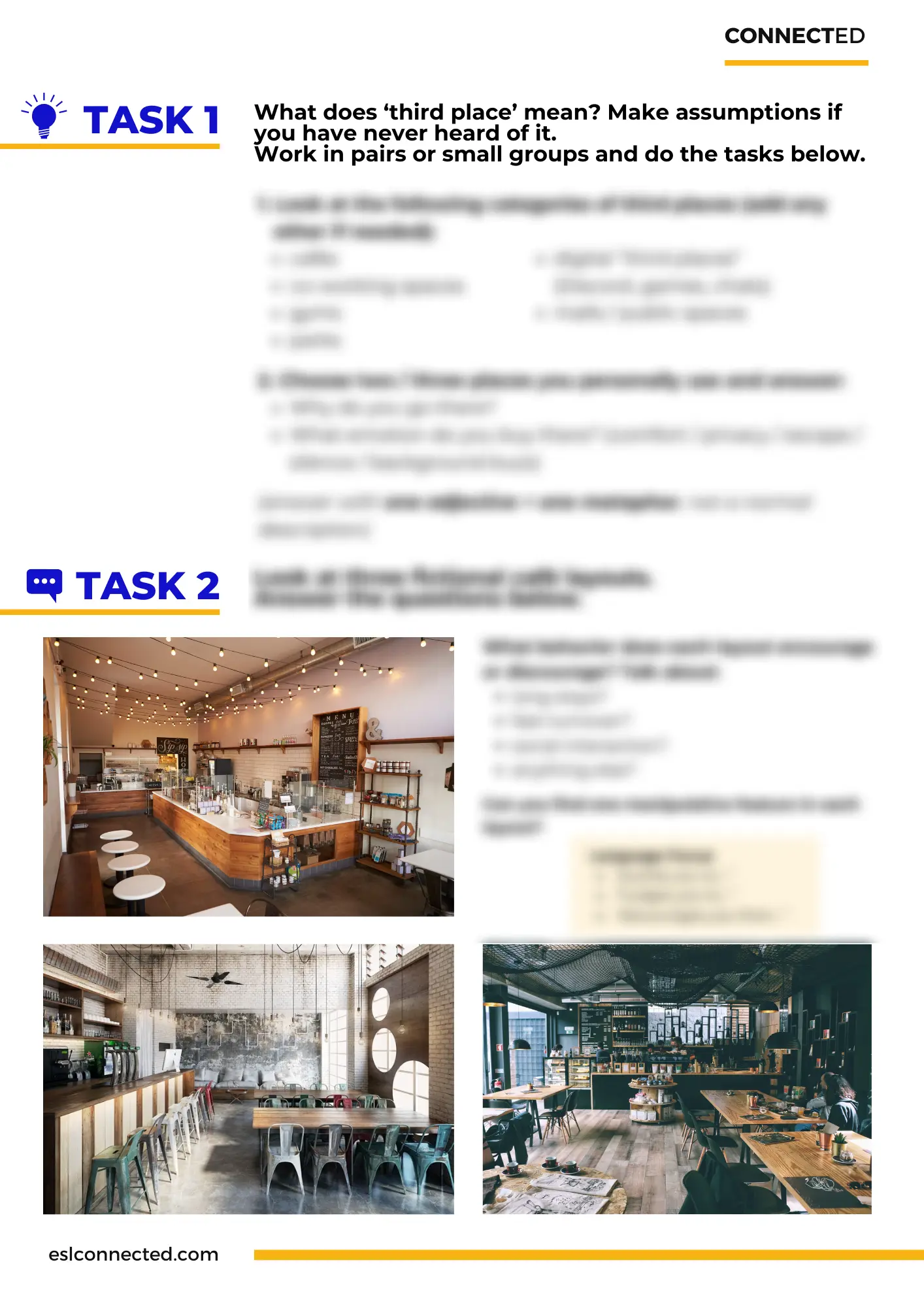
✅ Café layout analysis exploring how space design encourages or discourages certain behaviors
✅ A pros-and-cons debate comparing grab-and-go models with traditional third places
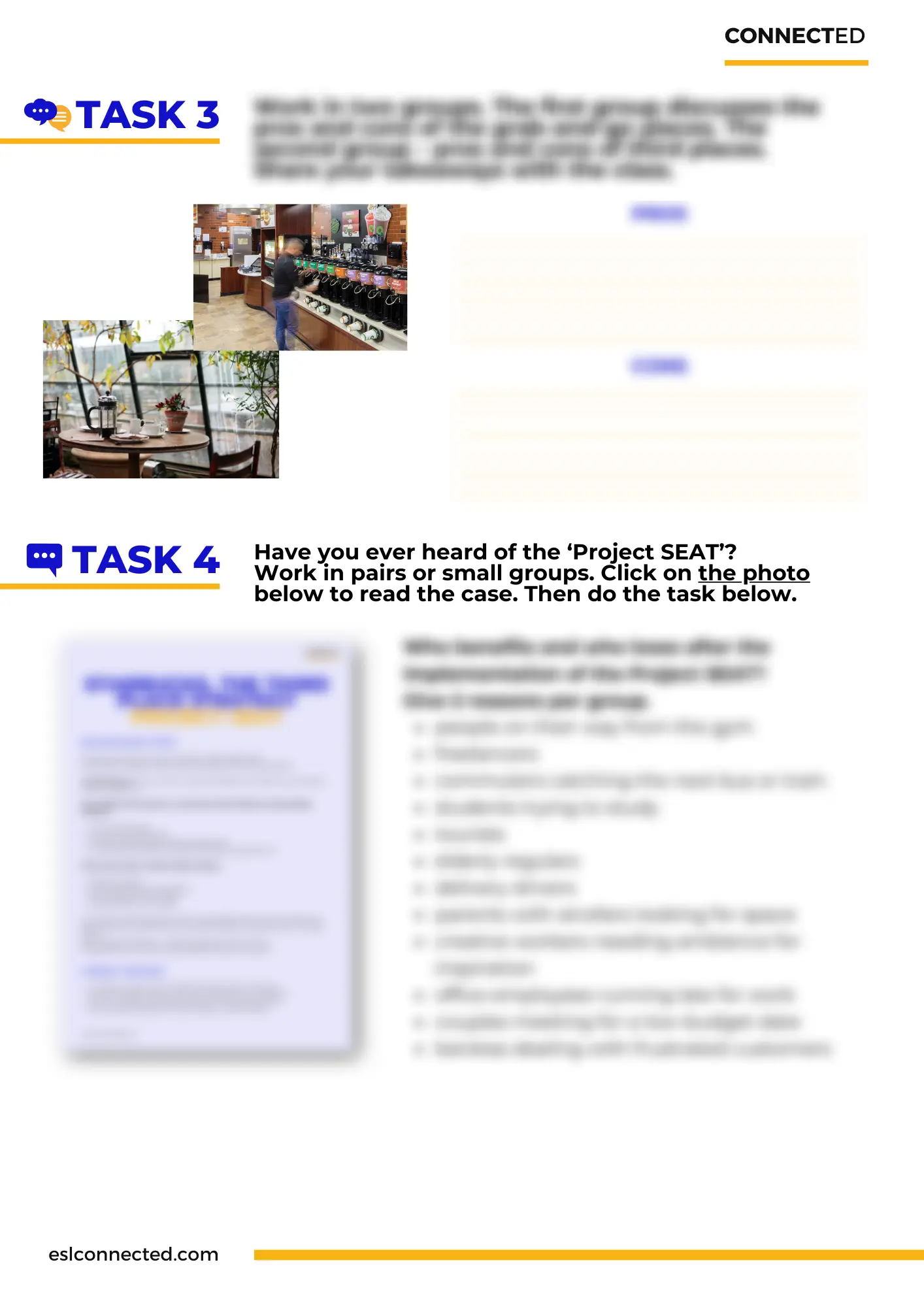
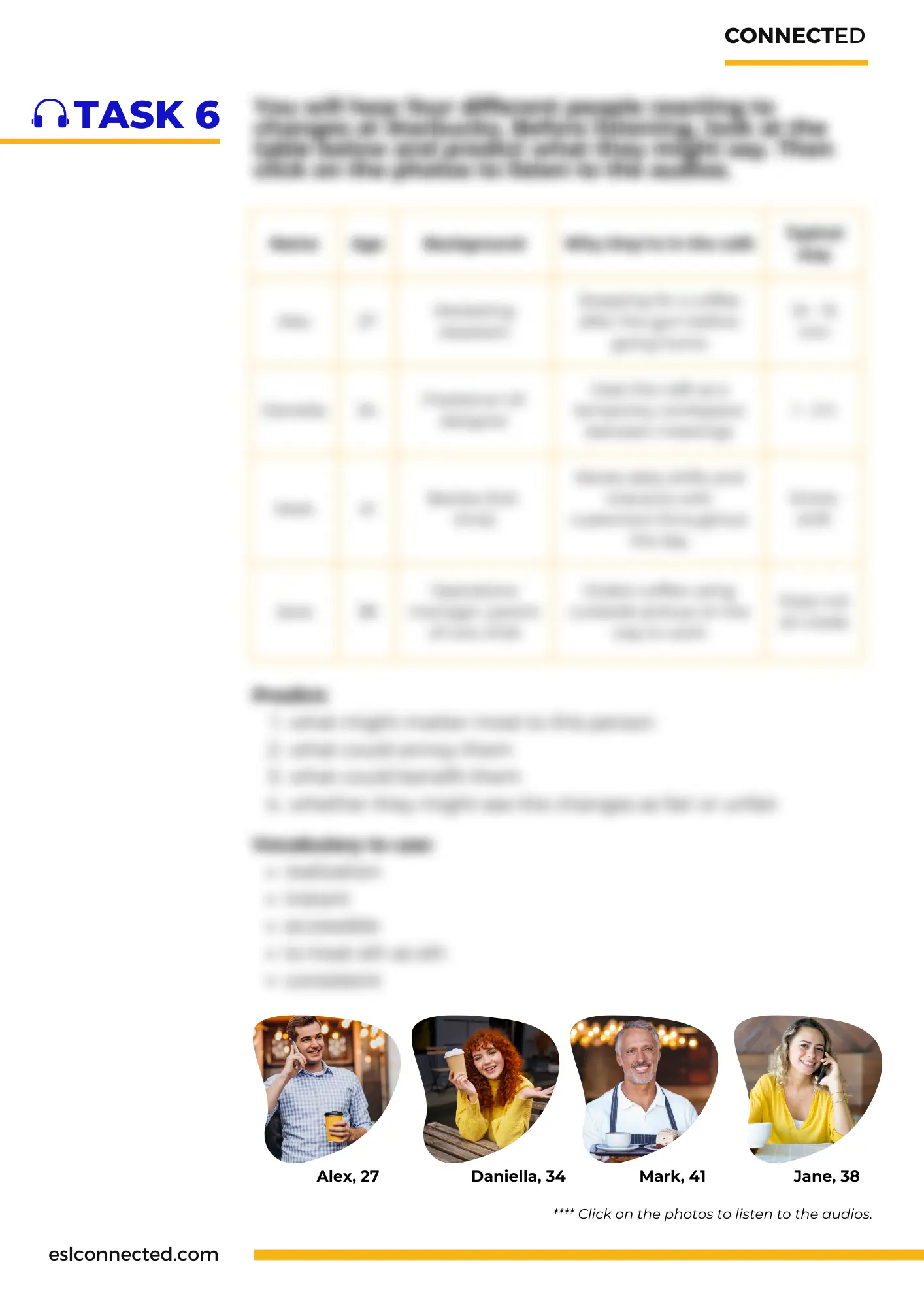
✅ A case study task analyzing Starbucks’ Project SEAT and its impact on different customer groups
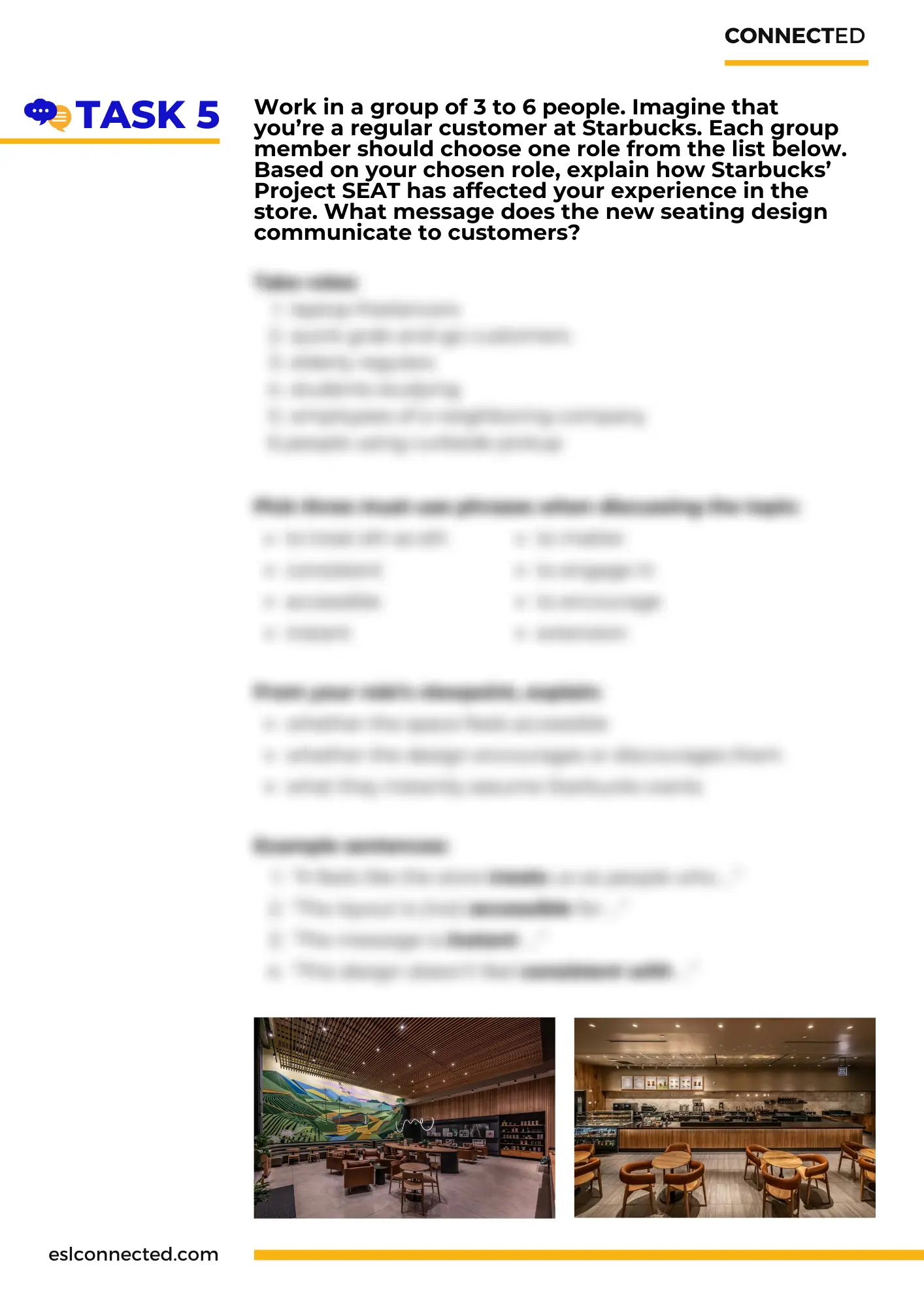
✅ Role-based discussions from multiple stakeholder perspectives
✅ A listening activity with prediction tasks and guided reaction analysis
✅ High-level discussion questions on branding, positioning, loyalty, and consistency
✅ Pronunciation practice to strengthen fluency and clarity
✅ A final summary task to activate new vocabulary and consolidate learning
The result is a dynamic, conversation-driven lesson that develops critical thinking, persuasive speaking, and real Business English fluency.